Bridging the Divide: Harnessing DeFi to Modernise Traditional Finance — Swift, Qivalis and FairSquareLabs set out the operating model behind Project Pangea
EV-065 · Swift / Qivalis / FairSquareLab / Chainlink · 2026-06-24 · Evidence class: documentation · Confidence 96%
Fernando Vázquez (moderator); Nick Kerigan; Jean-Luc Gustave; Joonhong Kim — President Capital Markets, Chainlink; Managing Director & Head of Innovation, Swift; Head of Partnerships Asia Pacific, Qivalis; CEO & Founder, FairSquareLabs / Korea Digital Asset Custody / Kloint
In plain English
In plain terms: the day after Project Pangea was announced, executives from Swift, the European bank stablecoin consortium Qivalis, and Korea's FairSquareLab sat on a panel run by Chainlink and explained why they are building it. The core problem: a Korean won stablecoin issued in Korea and one issued in Japan are treated as two different things, so money gets stuck and compliance work multiplies. Pangea is meant to let a euro stablecoin and a won stablecoin swap directly, instantly, without going through a chain of correspondent banks. Swift's innovation lead also said its blockchain ledger is now being built for real transactions this year.
Detail
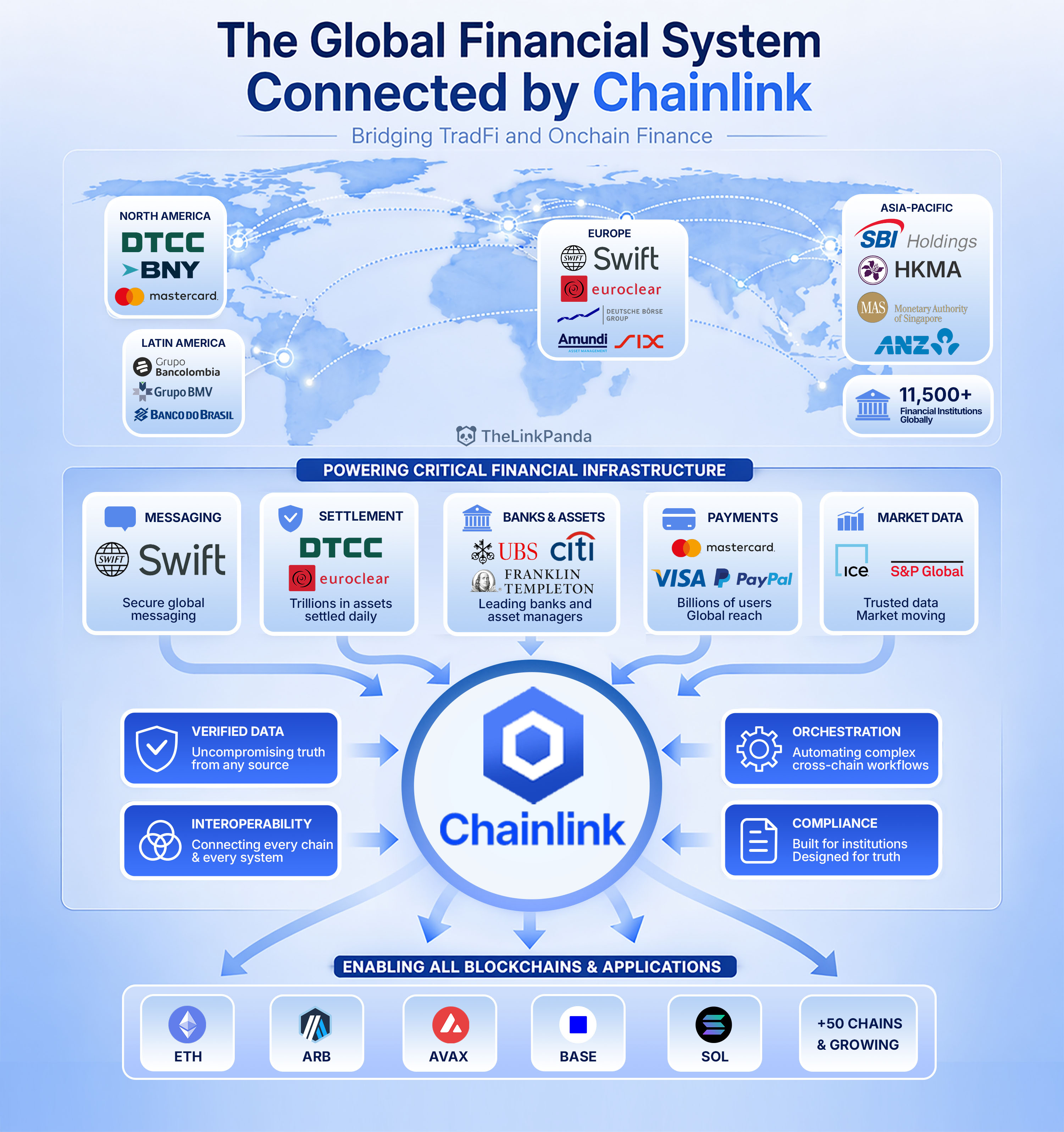
Evidence class: DOCUMENTATION. Official Point Zero Forum session (Workshop Room, Level 1; 24 Jun 2026, 13:00–13:30), moderated by Fernando Vázquez, President of Capital Markets at Chainlink Labs, recorded the day after Project Pangea was announced (see EV-054), in which three named executives describe the initiative and the infrastructure around it. What each participant stated: • Jean-Luc Gustave (Qivalis) — Qivalis is a euro stablecoin consortium owned by 37 European banks across 15 countries, issuing an EMT under MiCA, founded on a principle of European sovereignty. He describes trust between consortium members, some of whom compete, as the central requirement, and notes that Qivalis proactively approached the HKMA despite not being regulated under Hong Kong's stablecoin regime. (01:12–01:53, 08:21–10:35, 28:08–29:28) • Joonhong Kim (FairSquareLab) — founded the firm in Korea in 2018; its subsidiary Korea Digital Custody is described as the first licensed digital asset custodian in Korea. Project Pangea grew out of an earlier stablecoin cross-border pilot with Progmat, the Japanese infrastructure operator backed by three megabanks. The problem it exposed: a won stablecoin issued in Korea and one issued in Japan behave as distinct instruments, multiplying compliance and reconciliation overhead and trapping liquidity. Pangea's answer is onchain FX between the two. (01:55–02:43, 14:00–16:50) • Nick Kerigan (Swift) — Swift connects roughly 11,000 banks and corporates, sees value equivalent to world GDP across the network every two to three days, and operates at 99.99% availability. He states that the Swift ledger, a blockchain-based ledger running on the Swift network, is entering an MVP phase with the aim of live transactions during 2026. (04:05–04:32, 21:56–22:19) • Korea's regulatory direction — Kim describes an emerging consensus among Korean regulators and market participants favouring permissioned public chains with built-in compliance and risk controls, rather than permissionless networks. (11:03–13:28) • Chainlink's own characterisation — the Chainlink Labs moderator states that Chainlink works in partnership with Qivalis, FairSquareLab and Swift on this class of problem. (25:38) • Timeline — asked how long migration to onchain rails will take, Kim estimates a couple of decades, citing CLS taking more than 30 years to establish. Kerigan frames the outcome as combining the existing financial stack with new capabilities rather than replacing it. (23:41–25:24) Boundary of this entry: Kerigan also describes the Swift Payments Scheme going live at the end of the month, with a first transaction between Westpac and Standard Chartered settling in 37 seconds (21:22–21:47). No Chainlink involvement in that scheme is stated by any participant, and it is recorded here as context only — not as evidence of Chainlink adoption.
Why it matters
Evidence class is documentation, not pilot: this is named executives describing work publicly, not a document recording that the work occurred. Its value is that it puts the operating rationale for Project Pangea on record from the participants themselves — specifically why fragmented won stablecoins across jurisdictions created the problem Pangea is built to solve — and captures Swift's Head of Innovation stating the Swift ledger has moved from concept to MVP with live transactions targeted this year. Two of the three organisations are named Pangea consortium partners in the primary announcement; Swift is not, and the entry is worded to preserve that distinction.
Verified — video primary source; date, session title, participant names and roles confirmed against the official Point Zero Forum programme; organisation names and Project Pangea structure corroborated by the PRNewswire release of 23 Jun 2026
Topics: Project Pangea, Qivalis, FairSquareLab, UniKA, SWIFT, Stablecoins, FX, Cross-Border, Korea, Europe, ISO 20022, Settlement