CCIP 2.0 launches with institution-operated Cross-Chain Verifiers, protocol-level compliance and configurable settlement speed
EV-078 · Chainlink Labs · 2026-09-28 · Evidence class: documentation · Confidence 92%
Johann Eid — Chief Business Officer, Chainlink Labs
In plain English
In plain terms: CCIP is the system Chainlink uses to move tokens and messages between blockchains. Version 2.0 adds three things. A bank can now run its own checkpoint that has to approve a transfer before it happens, on top of Chainlink's own checks — so if Chainlink's network were ever compromised, the bank's own approval would still stand in the way. Compliance checks like sanctions screening can now happen on the transfer itself rather than in each app. And you can choose between fast transfers and waiting for full certainty. The catch is that more choices mean more ways to choose badly: picking speed over certainty on a large transfer is a real risk, and it is now the integrator's decision rather than the protocol's.
Detail
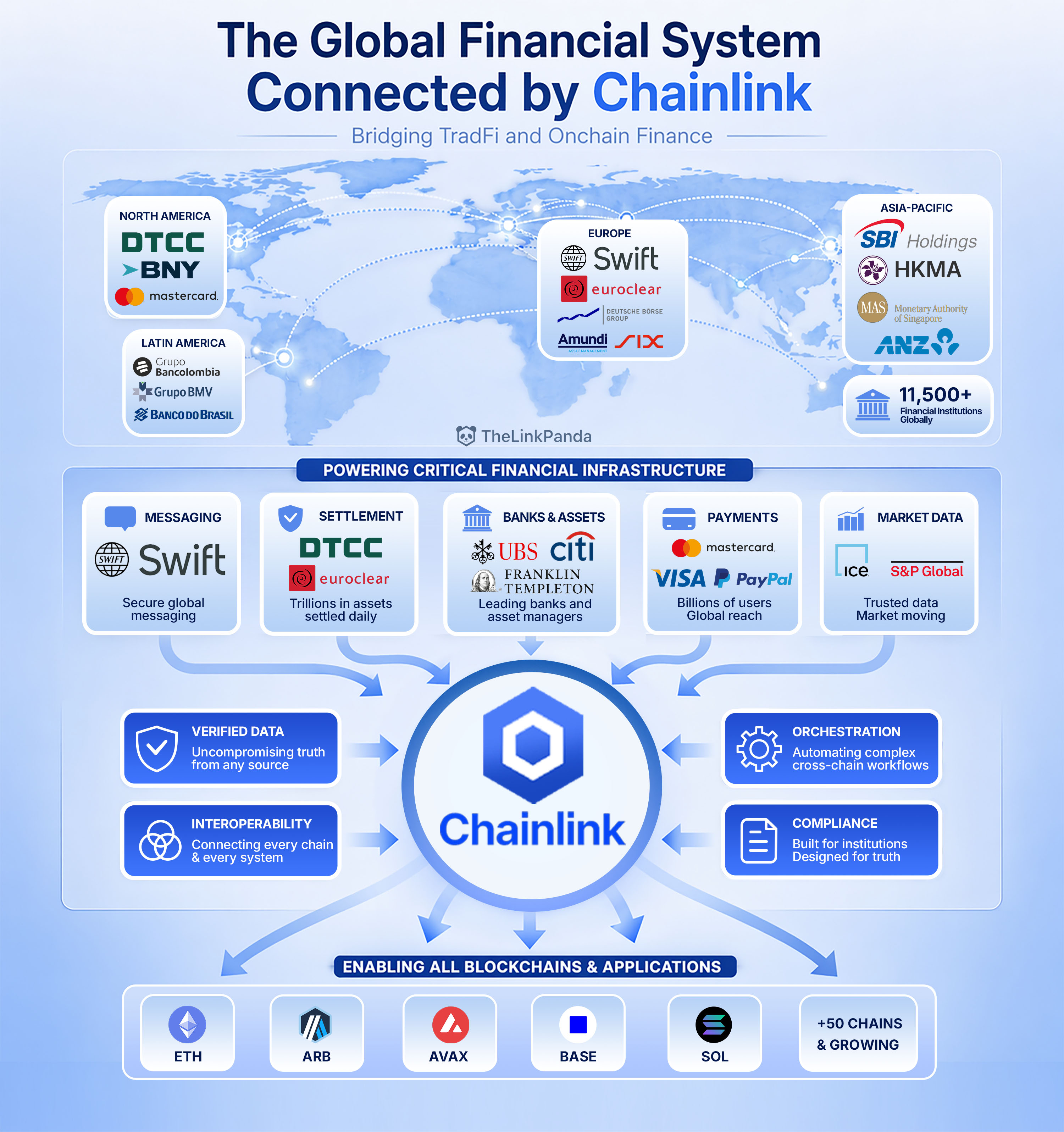
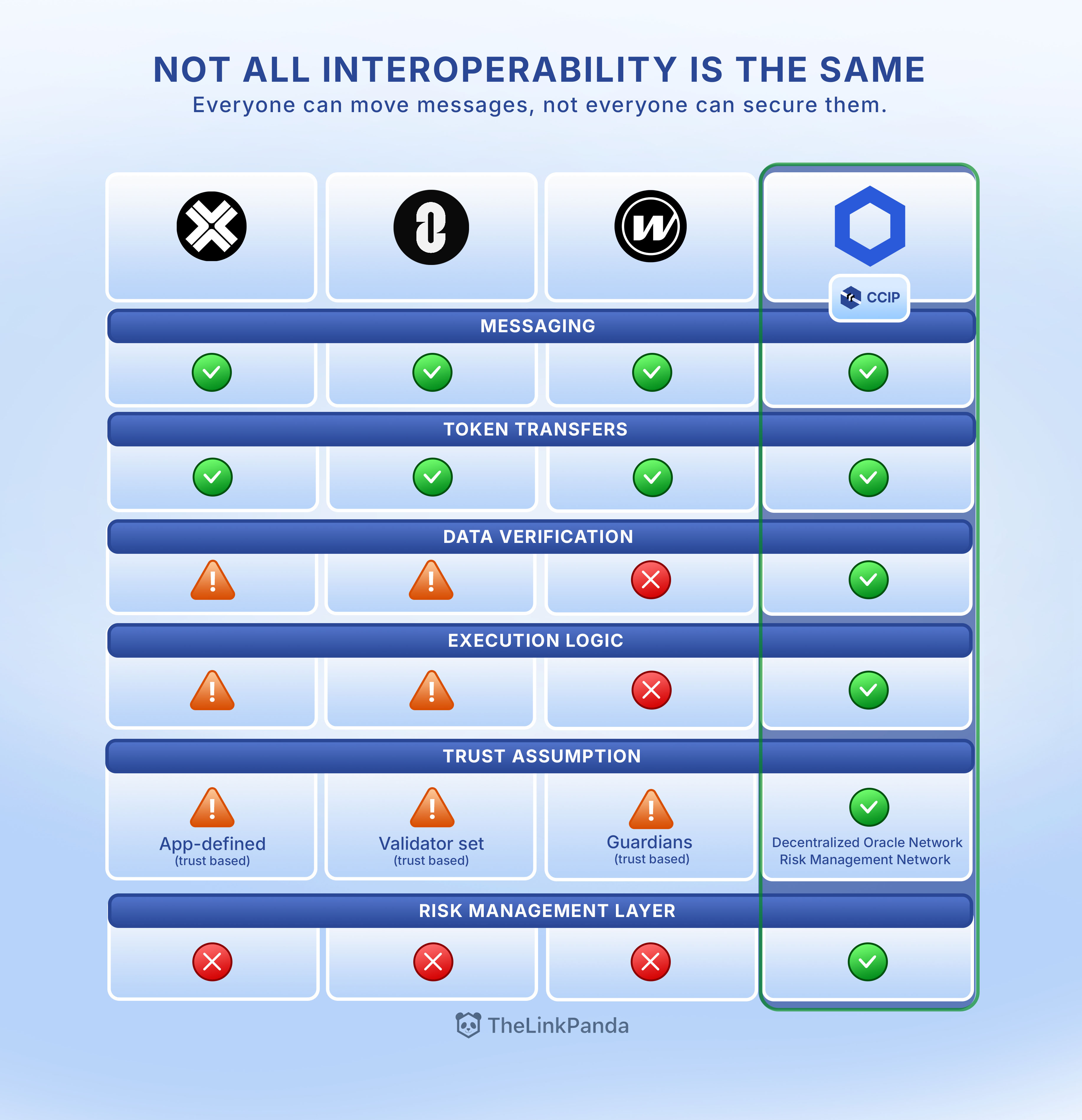
Evidence class: DOCUMENTATION. Chainlink released CCIP 2.0 on 28 September 2026. The release is live. What changed, and why each matters: • Cross-Chain Verifiers (CCVs) — an institution or token issuer can operate its own verification layer that must approve a transfer before CCIP executes it, in addition to Chainlink's standard 16-operator verifier network. Pre-built starter kits are provided for Amazon Web Services and Google Cloud. This is additive rather than substitutive: the institution's verifier is a second signature, not a replacement for Chainlink's. • Built-in compliance — Chainlink's Automated Compliance Engine (ACE) is incorporated into the cross-chain framework, allowing KYC, AML and sanctions screening to be enforced per transaction at the protocol layer rather than in each application. • Configurable settlement speed — transfers can execute faster than source-chain finality, or wait for full finality. Full finality with the standard verifier network remains the default. • Modular fees, and redesigned API, SDK and CLI tooling. • The standalone Risk Management Network is retired; optional verifiers are described as providing equivalent safeguards. • Backwards compatibility — the Router interface is unchanged and existing integrations continue to work on full-finality defaults. New token-pool controls require an opt-in contract upgrade. • Chainlink states CCIP is being prepared for Ethereum's planned Fast Confirmation Rule. Stated scale and certifications: Chainlink says CCIP secures more than $84 billion in total cross-chain token value, and that the platform holds ISO 27001 certification and a SOC 2 Type 2 attestation. Named in the announcement as partners or supporters: Amazon Web Services, ANZ Bank, Archax, Deutsche Börse Group's Crypto Finance, Fidelity International, Google Cloud, SBI Digital Markets, Sygnum and Taurus. Being named in a launch announcement is not the same as having deployed CCIP 2.0, and no deployment by any of them is claimed. Context for the design: reporting connects the CCV model directly to the April 2026 exploit in which approximately $292m of rsETH was drained from a LayerZero-powered bridge running a single-verifier configuration (see EV-068). The trade-off, stated plainly: configurability moves risk from the protocol to the integrator. A faster-than-finality setting accepts exposure to source-chain reorganisation; the correct setting for a small operational transfer is not the correct setting for a large treasury movement. Retiring the standalone Risk Management Network in favour of optional verifiers means a safeguard that was previously part of the baseline is now something an integrator must choose to run. CCIP 2.0 is not automatically safer than CCIP 1 — a well-configured deployment is safer, and a badly configured one may not be. Boundary of this entry: this documents a product release by Chainlink. It is not evidence of adoption. No institution is documented as having deployed a CCV or the compliance features at time of entry.
Why it matters
The most substantial architectural change to CCIP documented in this database, and the first that lets a counterparty hold its own veto over cross-chain execution rather than delegating verification entirely. For regulated institutions that distinction is material: running your own verifier alongside Chainlink's is co-signing rather than outsourcing, and it addresses the governance objection that has limited institutional bridge adoption. Moving KYC, AML and sanctions screening into the protocol layer is the second structural change. Recorded as documentation rather than adoption — the release is live, but no institution is yet documented as having configured a CCV.
Primary source: Chainlink CCIP 2.0 announcement, 28 September 2026; Chainlink documentation and changelog at docs.chain.link/ccip
Verified — Chainlink's own announcement and documentation of 28 Sep 2026, independently reported by The Defiant, Crypto Times, Blockchain Reporter and others
Topics: CCIP, CCIP 2.0, Cross-Chain Verifier, ACE, Compliance, Interoperability, Product Launch, ISO 27001, SOC 2