Nazarov states Chainlink CRE is being enabled as a preferred interface into the Swift Ledger — Sibos 2026 interview
EV-084 · Chainlink Labs · 2026-10-01 · Evidence class: documentation · Confidence 78%
Sergey Nazarov — Co-founder and CEO, Chainlink Labs
In plain English
In plain terms: Swift is building its own ledger for tokenized payments. Chainlink's CEO says Chainlink's CRE is being set up as a preferred way for institutions to connect to it — to access it, sign transactions and carry out operations. If Swift confirms that, it is a significant position to hold. For now it is Chainlink's account of its own work, said in an interview, with nothing published by Swift to match it.
Detail
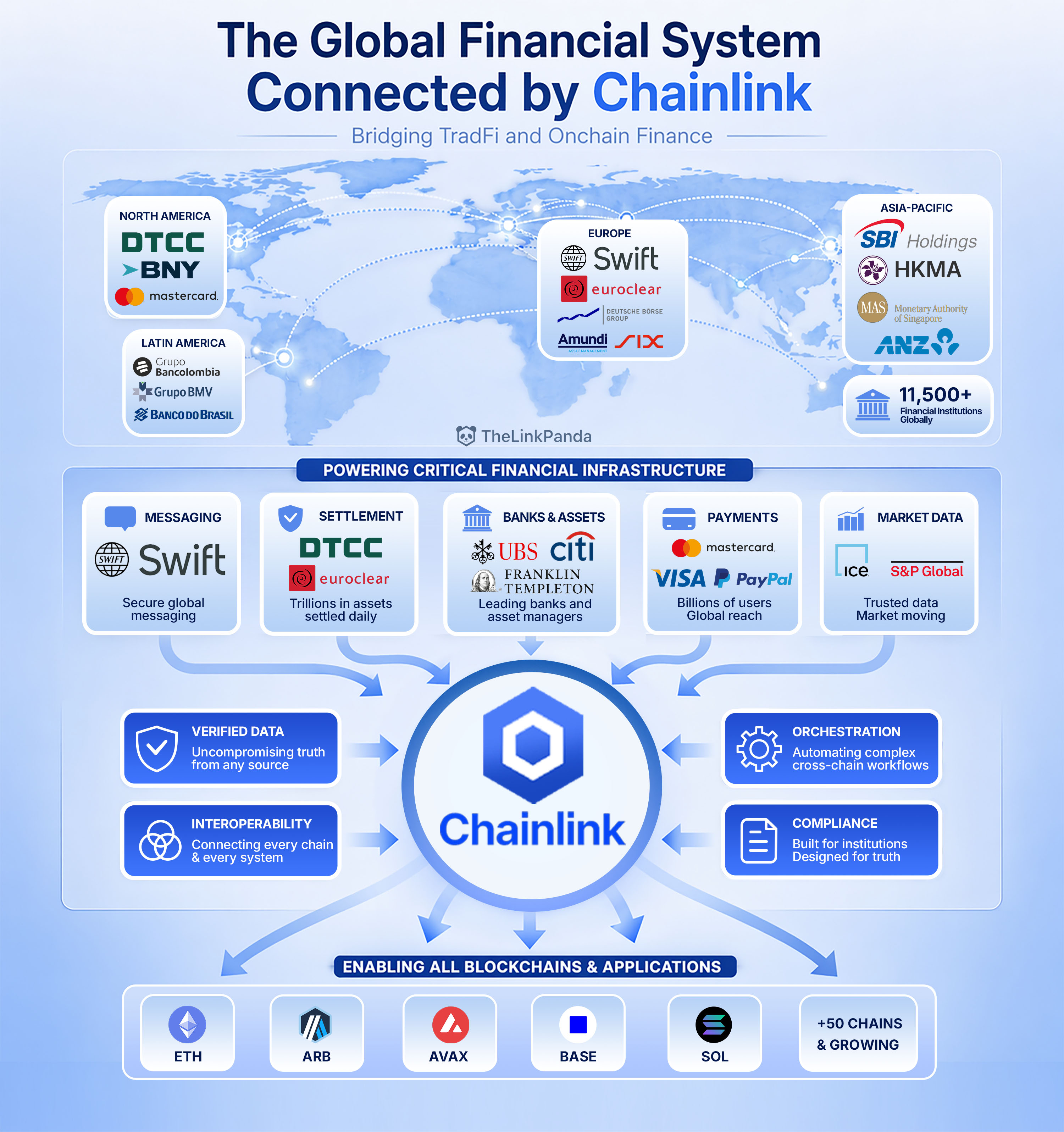
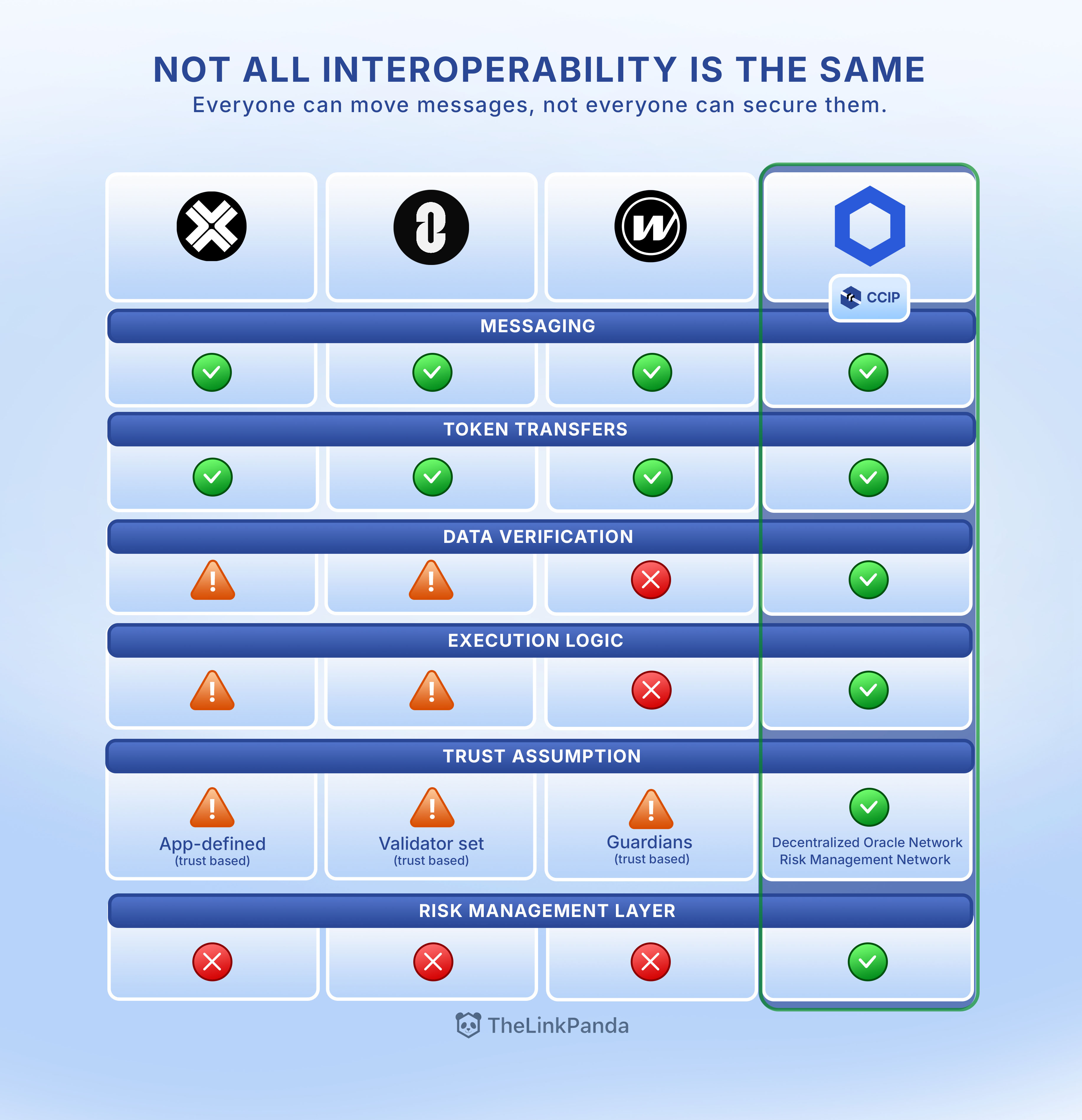
Evidence class: DOCUMENTATION. Video interview with Sergey Nazarov, co-founder and CEO of Chainlink Labs, recorded at Sibos 2026 and published approximately 1 October 2026. The principal new claim — the Swift Ledger: Nazarov states that Chainlink is enabling the Chainlink Runtime Environment (CRE) to be a preferred interface into the Swift Ledger, Swift's approach to tokenized payments. He describes two stated benefits: that CRE allows key operations, access, transactions and signing on the Swift Ledger that would not otherwise be available, and that it allows the Swift Ledger to be used as a signing solution or to plug in other signing solutions. He says this should accelerate adoption of the Swift Ledger and make CRE a widely adopted means of interfacing with it. This is the first claim in this database of a defined technical role for Chainlink within the Swift Ledger specifically. EV-065 records Swift's Head of Innovation stating in June 2026 that the Swift Ledger was entering an MVP phase targeting live transactions in 2026; this claim describes Chainlink's position relative to it. Other statements made in the same interview: • DTCC AppChain — described as a blockchain environment creating legally binding ownership and real tokenization of equities, which Nazarov characterises as the first form with the same rights and the same relationship to the underlying equity as in traditional markets. He describes Chainlink's role as pricing tokenized equity at the point it is used as collateral, moving collateral, and enabling payment and repayment of loan obligations. • CCIP 2.0 — described as adding TradFi-oriented features to capabilities Chainlink already had for DeFi: granular compliance configuration, and the ability for a group of banks to build their own bridging network with their own members. This corroborates the Cross-Chain Verifier design documented in EV-078 from the operator's perspective. • Fulcrum — described as simplifying interaction with securities lending and repo agreements, letting business owners at prime brokers, agent lenders, pension funds and hedge funds access multiple collateral venues and lending protocols through a single interface (see EV-080). • Sibos observations — Nazarov describes two trends: that tokenization is now an accepted rather than controversial topic, with essentially every FMI, bank and service provider having a digital assets offering; and growing discussion of AI agents using tokenized cash and stablecoins for payments. • Company claim — Nazarov states that over 70% of DeFi is run through Chainlink globally. This is a Chainlink figure with no stated methodology and is recorded as a claim, not as a verified statistic. Boundary of this entry: every statement here is made by the CEO of Chainlink Labs about Chainlink Labs, in a video interview. No counterparty confirmation exists for any of it. The Swift Ledger claim in particular describes work Chainlink says it is doing; Swift has published nothing corresponding, and Swift has historically been more reserved than Chainlink in characterising the relationship. Graded documentation and should not be cited as a Swift announcement.
Why it matters
The first statement in this database describing a defined technical role for Chainlink within the Swift Ledger — CRE as a preferred interface for operations and signing. If confirmed by Swift it would be among the most consequential entries here, because the Swift Ledger is Swift's own tokenized payments infrastructure rather than an experiment. It is graded documentation because it is a single-party claim by the CEO of the company making it, with no Swift publication to corroborate it. The interview also provides operator-side corroboration of the CCIP 2.0 custom-verifier design and of Fulcrum's intended users.
Partially verified — transcript of a published video interview with a named, identifiable speaker. No counterparty or primary-document confirmation located for the Swift Ledger claim. Related products (CCIP 2.0, Fulcrum, DTCC AppChain) independently documented in EV-078, EV-080 and EV-027/034/042
Topics: Swift, Swift Ledger, CRE, Sergey Nazarov, Sibos 2026, CCIP, Fulcrum, DTCC, Tokenization, AI Agents